
And I specifically mean, LIFT. WEIGHTS. I am not talking about body-weight or banded movements. Of course there is a time and place for that, for example rehab exercises and core work, warm-ups and movement repatterning…but not when it comes to getting STRONG. Like performance-enhancing, injury-resilience-building strong.
Given my history of strength training and strength sports (once upon a time I was strong-ish!), someone might think I’m biased in saying that lifting weights is non-negotiable for runners. I am biased, yes. But it doesn’t matter, because the evidence is crystal clear!
Here is why I always recommend runners lift weights on a regular basis…
Impact on performance
Regardless of the distance you like to run or race, and regardless of whether you are a beginner or elite athlete, strength training IMPROVES:
- Running economy: The oxygen or energy cost to run at a given sub-maximal velocity. 6-20 weeks of strength training boosts running economy by 2-8%
- Time trial performance: Greater strength may result in lower levels of relative force production per stride. This delays recruitment of higher threshold muscle fibers and provides a fatigue resistant effect. Luckily strength training also improves motor unit recruitment, so when you do get to the point where you need those higher threshold fibers, you can call on them more easily.
-> Superior performance during the later stages of an effort. - Maximal sprint speed. Again, thanks to better motor unit recruitment.
It may also improve velocity at VO2max. This was only shown in studies with longer duration strength programs (i.e. 14 weeks vs. 6-8 weeks).
Plyometric training is also useful for performance. But according to one meta-analysis and systematic review, heavy resistance training provided greater effects on running economy and time trial performance, compared to plyometrics. And they specifically found greater effects of heavy loads compared to lower loads…like >90% of 1RM, or <4RM .
Impact on injury risk
The most robust systematic reviews and meta-analyses studied the effects of strength training on injury prevention for sports in general, not particularly running. But it’s still compelling: strength training programs reduced sports injury risk by >50% and reduced injury rate by 66%.
There is a review on “exercise-based injury prevention programs” in runners specifically (AKA they looked at any study that used any sort of exercise program with the intention of reducing injury risk in runners). They found that in general, exercise-based injury prevention programs provided no significant positive effect on either injury risk or injury rate.
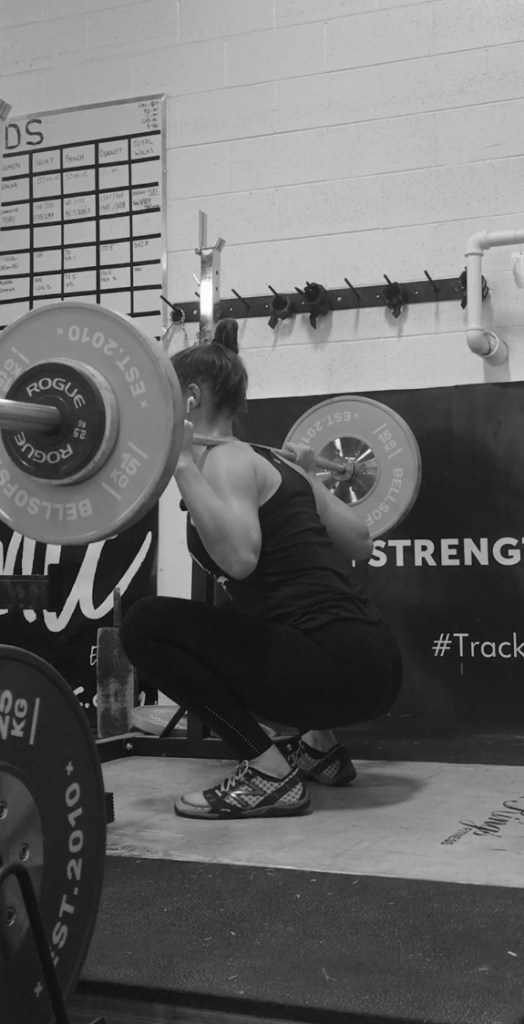
However, there are some very important things to note…
- Significant positive effect on injury risk WAS noted for exercise interventions completed with supervision. The studies with supervised programs reported high adherence to the program compared to other studies. So basically, there was a benefit if people actually did what they were told to do.
- They also noted that while higher volumes and intensities of strength training have demonstrated consistently favorable results for overuse injury outcomes in other sports, only four studies in this review utilized strength-based exercises, and these were of relatively low volume and intensity. And we know that heavy (high intensity) is optimal. So the strength based programs in this review were not even dosed appropriately.
So, there is a good chance that strength training can reduce injury risk in runners. Especially when you consider the benefits specifically for tendons and bones, which are common tissues that suffer from overuse injuries. Read on.
Side note: PLEASE DO NOT THINK that you can just stretch to prevent injuries.
That systematic review and meta-anlalysis showed no beneficial effect for stretching (RR 0.963), whereas studies with multiple exposures i.e. stretching AND strengthening (RR 0.655), proprioception training (RR 0.550), and strength training (RR 0.315) showed a tendency towards increasing effect.
[RR = relative risk. Relative risk is the ratio of the probability of an event (in this case, injury) in an exposed group to the probability of the same event in an unexposed group. It measures how much more or less likely an outcome is in one group compared to another. RR of 1.0 means no change in injury risk for the exposed group vs the unexposed group. In this case it basically means that the lower the number, the lower the risk of injury as a result of the intervention.]
Notice that for stretching, RR = 0.963, which means there’s basically no reduction in injury risk as a result of stretching. For strength training, RR = 0.315. *mic drop*
The authors summarized it with, “Despite a few outlying studies, consistently favourable estimates were obtained for all injury prevention measures except for stretching.”
Impact on tendons
Heavy resistance training and plyometric training increase tendon stiffness. Increased tendon stiffness reduces how much and how fast a muscle needs to shorten when it’s being used (the best example of this is the Achilles tendon). This allows the muscle fibers to optimize their length and remain closer to an isometric state, which reduces the level of muscle activation and energy cost of running.
High loading intensities (i.e., 90% MVC, 70% RM, 80% eccentric RM) are more effective compared to low intensities to induce adaptive responses in tendons. Once again, we see that HEAVY LOADS are more useful. In one review:
- Analyzing the interventions that used muscle contraction intensities higher than 70% of MVC or 1RM, and those using lower intensities, revealed significantly different weighted averaged effect sizes of tendon stiffness of 0.90 and 0.04, respectively. THAT IS A HUGE DIFFERENCE. LIFT HEAVY.
- They also found that while shorter intervention durations (8 to 12 weeks) may induce tendon adaptive responses, longer durations (≥12 weeks) seem to be superior.
In a different study, tendon stiffness did not change until 2 months of training, and the increase (50.3%) reached statistical significance at the end of the training period. After 1 month of detraining, tendon stiffness had already decreased to pre-training level. This means that you need to be consistently doing heavy strength work, especially if you have a history of tendinopathy.

Impact on bones
Bone stress injuries (BSI) are no joke. And sadly, they are rather common in distance runners. High-volume runners (96-120 km/wk) have lower bone mineral density (BMD) than low-volume runners (22-32km/wk). That’s because running does NOT improve bone density.
The good news, though, is that resistance-trained runners have greater BMD than non-resistance-trained runners and untrained peers. You can reduce your risk of BSI by strength training for >7 months (reduces risk by 4x!). Unfortunately there is no reduction in risk until you get to 7 consecutive months, so stay consistent!
The ideal combination for bone health is heavy resistance training + plyometrics, 2-3x/week.
Why plyometrics? Plyometrics are particularly helpful for bones because of the fast loading rate. Multidirectional is best. And short bouts are enough. That’s because bones cells become desensitized to repetitive loading, so after about 20 consecutive loading cycles, they stop responding to the stimulus and anything more than that is not going to benefit you (for the sake of bone health specifically – in a tendinopathy rehab progression you can benefit from 30 to 60 loading cycles). The good news is they regain their sensitivity after 4-8 hours. This means if you are not injured and you are trying to improve your bone health, you can do short bouts of plyometrics 2-3x/day. And it’s best to do them before your run, or 4-8 hours after your run.
Fun fact: muscle force accounts for 80% of the load imparted onto bones(!!!). Greater muscle mass -> stronger bones. (Ex: a 1cm decrease in calf girth results in 4x higher risk of tibial BSI).
The one thing to note here, is that if you ADD plyometrics or strength training to a program where the athlete is underfueling, there is no benefit to the bone. You absolutely need to resolve low energy intake first. Not eating enough is devastatingly common in endurance sports, whether or not it is intentional. I implore you to really self-reflect and evaluate whether you are eating enough, and if you are not, reach out for help from a psychologist and/or dietitian. Most of us will need both.
Strength training myths
1) It will make you bulky/heavy
On study looked at strength training vs. endurance training vs. a combination, and found that the mean effect size (which is the magnitude of a relationship between two variables) for hypertrophy for strength training was 1.23; for endurance training, it was 0.27; and for combination training, it was 0.85.
This means that endurance training interfered with the ability of strength training to increase muscle mass.
AND…
When they looked at actual increases in strength, the effect size for strength training was 1.76; for endurance training, it was 0.78; and for concurrent training, it was 1.44.
That means that those who did endurance training and strength training got stronger (even though they did not “get bulky”).
Basically, running itself interferes with the ability of strength training to create hypertrophy.
It takes a LOT of very strategic strength training and nutritional support to meaningfully add mass. If you are lifting 2, even 3 times per week for 30-60 minutes, especially while also running, you are not going to add mass.
2) You should focus on muscular endurance rep ranges
I think I’ve made it pretty clear so far that this is wrong, and that low rep ranges with heavy weights is where it’s at. Studies that have attempted to compare strength training techniques in distance runners have generally shown heavy resistance training to be superior at improving aerobic parameters and maximal anaerobic running speed.
Let’s look at one specific study as an example, where they compared strength-endurance vs. heavy resistance training vs. “complex” training (heavy lifting superset with plyometrics).
- The strength-endurance group did low weight and high reps (40% of 1RM for 20-30 reps with 1 min rest)
- The heavy resistance groups did 80-85% of 1RM with 4 min rest
–> Only the strength-endurance group showed NO IMPROVEMENT IN:
- 1RM strength
- CMJ height
- 14km/hr running economy
- 50m sprint
- 5km time trial
3) It will interfere with your run training because you will get sore
No. Not if you don’t treat it like an opportunity to fatigue yourself!
Strength training is NOT circuit-style HIIT workouts, okay? To gain strength, you need to actually rest between sets. Move slowly and with intention, with good form and focus. Try…
3-4 sets of 4-6 exercises
Start at 10-12 reps when you are new to it, and slowly work down to 4-6 reps.
Leave 1-3 “reps in reserve”
Take 1.5-3 min between sets
Choose multi-joint exercises using free weights, which provide a better neuromuscular stimulus compared to machine-based or single-joint exercises. They have:
- Higher level of coordination, multiplanar control, activation of synergistic muscles.
- Greater biomechanical similarity to running –> better transfer of training effect.
Usually these are closed kinetic chain exercises, like squats, deadlifts, split squats or lunges, calf raises. I usually advise also doing some upper body work as well, like bench press and chin-ups (or a scaled version).
TLDR;
Heavy, low rep strength training benefits performance, running economy, injury risk, and tendon and bone health.
Stay consistent with it long-term to get the benefits.
OKAY NOW GO LIFT WEIGHTS 🙂
Stay tuned for a post with a sample strength program, and considerations for specific subgroups of runners.
Sources:
Duplanty AA, Levitt DE, Hill DW, McFarlin BK, DiMarco NM, Vingren JL. Resistance Training Is Associated With Higher Bone Mineral Density Among Young Adult Male Distance Runners Independent of Physiological Factors. J Strength Cond Res. 2018 Jun;32(6):1594-1600. doi: 10.1519/JSC.0000000000002504.
Sports Med (2018) 48:1117–1149 https://doi.org/10.1007/s40279-017-0835-7. Effects of Strength Training on the Physiological Determinants of Middle- and Long-Distance Running Performance: A Systematic Review
DOI 10.7717/peerj.6787. Effects of complex training versus heavy resistance training on neuromuscular adaptation, running economy and 5- km performance in well-trained distance runners
J Physiol 597.7 (2019) pp 1873–1887 1873 The Journal of Physiology The increase in muscle force after 4 weeks of strength training is mediated by adaptations in motor unit recruitment and rate coding
Eihara et al. Sports Medicine – Open (2022) 8:138 https://doi.org/10.1186/s40798-022-00511-1. Heavy Resistance Training Versus Plyometric Training for Improving Running Economy and Running Time Trial Performance: A Systematic Review and Meta‑analysis
J Strength Cond Res. 2012 Aug;26(8):2293-307. doi: 10.1519/JSC.0b013e31823a3e2d. Concurrent training: a meta-analysis examining interference of aerobic and resistance exercises
Bohm et al. Sports Medicine – Open (2015) 1:7 DOI 10.1186/s40798-015-0009-9. Human tendon adaptation in response to mechanical loading: a systematic review and meta-analysis of exercise intervention studies on healthy adults.
Eur J Appl Physiol. 2012 Jul;112(7):2679-91. doi: 10.1007/s00421-011-2248-x. Epub 2011 Nov 22. Time course of changes in the human Achilles tendon properties and metabolism during training and detraining in vivo
Strength training as superior, dose-dependent and safe prevention of acute and overuse sports injuries: a systematic review, qualitative analysis and meta-analysis. Lauersen JB, Andersen TE, Andersen LB. Br J Sports Med 2018;52:1557–1563
The effectiveness of exercise interventions to prevent sports injuries: a systematic review and meta-analysis of randomised controlled trials. DOI: 10.1136/bjsports-2013-092538
Sports Medicine (2024) 54:1249–1267 https://doi.org/10.1007/s40279-024-01993-7. Do Exercise‑Based Prevention Programs Reduce Injury in Endurance Runners? A Systematic Review and Meta‑Analysis
I also get a lot of great summarized info from Dr. Rich Willy, DPT at Montana Running Lab. https://www.instagram.com/montanarunninglab/?hl=en
 Cadence Run Collective